I am just past the halfway point of my physiotherapy degree. 2 years down, 2 years to go. It feels like I am halfway through a marathon.
I wanted to write an update on my current mindset. After some reflection and thinking, I have made a conscious decision to change my approach to university.
BEFORE
The past 3 years (1 year of exercise and sport science + 2 years of physiotherapy) have been a real grind – mostly because of my narrow focus academically, with not much breathing room.
And it was for a good reason too. I needed the academic marks to take the next step forward. To meet the entry requirements for the degree, and to build the initial momentum in a new environment.
Two main things have come out of this process: – Being accepted into the physiotherapy program – Being accepted into the Honours program
However, this level of constant focus has had some negative side effects too. There was a dark period last year, where I was burning out and I had recurring thoughts of self-doubt and considered dropping out. Thankfully, I was able to manage those feelings and get through the other side.
NOW
Now, I am working on adjusting to a more well-rounded approach to university and life.
I plan to put more emphasis on: – Extra-curricular activities (I have signed up for two new roles: 1) Mentor to first-years students. 2) Student Rep for the NSW Branch of the Australian Physiotherapy Association) – Improving communication skills – Self-directed learning (I have been interested in learning about real estate, personal finance, and business) – Studying the industry (reaching out to mentors, researching trends, and thinking about the big picture) – Planning on my direction and goals for the next few years.
Some days, I have no idea what I am doing or where I should be going – just like everyone else I suppose. Ultimately, I am figuring it out as I go along.
As most of us are fortunate enough, we have been living with our parents for all our lives. And so that means we have not had to be financially responsible for shelter. But as we grow up into adults, we will have to face the question – “where will we live?”
As we grow older into the second half of our 20’s – the conventional path is to start full-time work, to want more independence, maybe starting a family, and move out and get a place of your own.
So what are the options, especially in the Sydney real estate market?
I did some basic calculations on the two options – buying and renting.
BUYING
The first option is buying. This seems to be the default long-term goal for most people. As Wikipedia says, “The Australian Dream is a belief that in Australia, home-ownership can lead to a better life and is an expression of success and security.”
Chatswood: 3 bed house – $1,775,000. 3 bed apartment – $1,346,500.
Strathfield: 3 bed house – $1,940,000. 3 bed apartment – $900,000.
Fairfield: 3 bed house – $707,500. 3 bed apartment – $500,000.
And here’s an article – the average piece of empty land in Kellyville is selling for $750,000, more than the median house price of Melbourne.
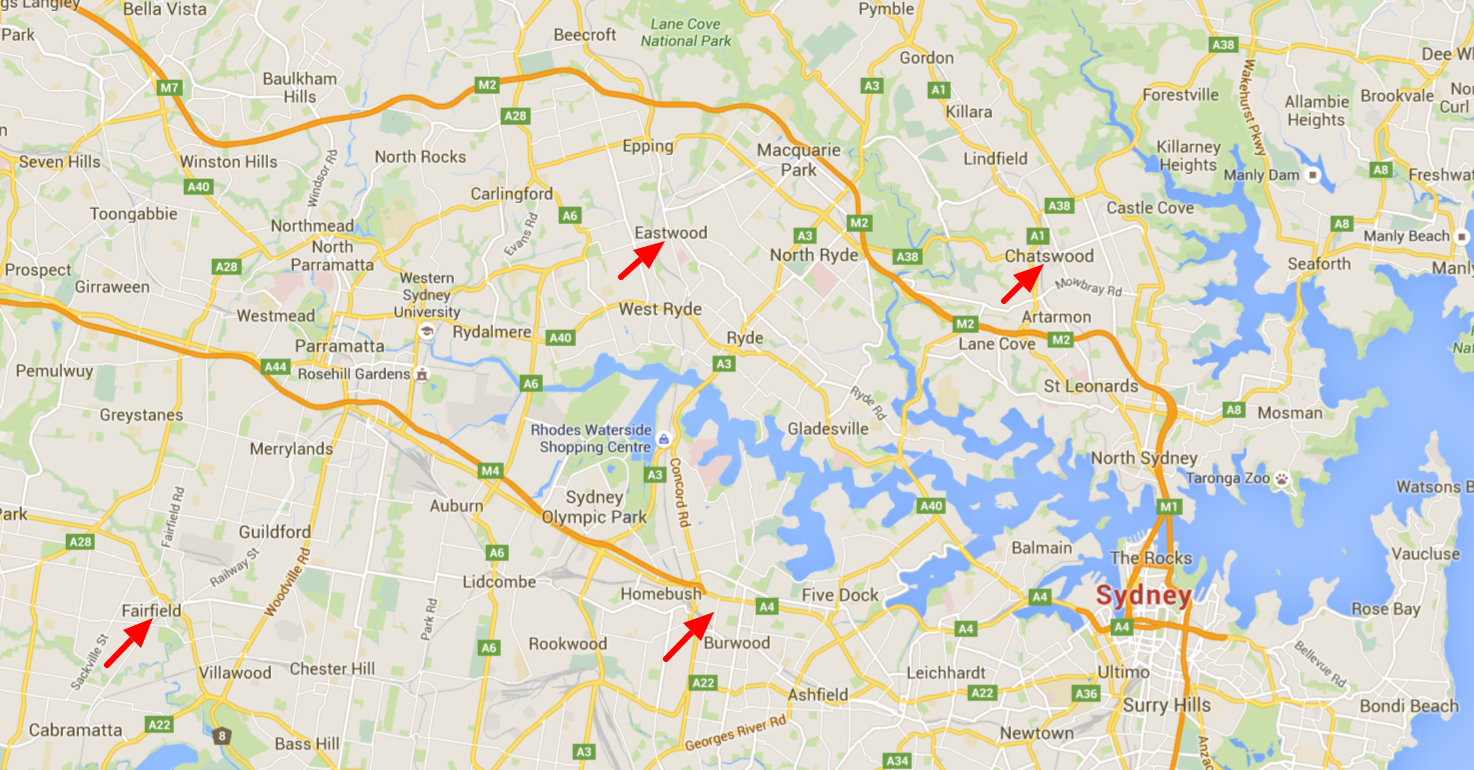
Eastwood, Chatswood, Strathfield, Fairfield on the map.
So how much would it cost to buy?
We can use some modest numbers and basic calculations. House price: $1,000,000. Let’s say you save up a put a $200,000 deposit upfront (20%). That means you have a $800,000 mortgage.
If you commit today to a 30 year loan, at current 4.5% interest rate, you will have to pay… $950 a week. For the next 30 years. That’s $50,000 a year.
With a $600,000 mortgage, that’s $700 a week. $36,000 a year.
Another important factor to remember – this is post tax income.
I think this catches many young people off guard, it certainly did for me when I first thought this through.
For example:
$60,000 salary is really $45,000 after-tax.
$70,000 becomes $50,000 after-tax.
$80,000 becomes $55,000 after-tax.
$90,000 becomes $60,000 after-tax.
And so on.. You can play with the pay calculator here.
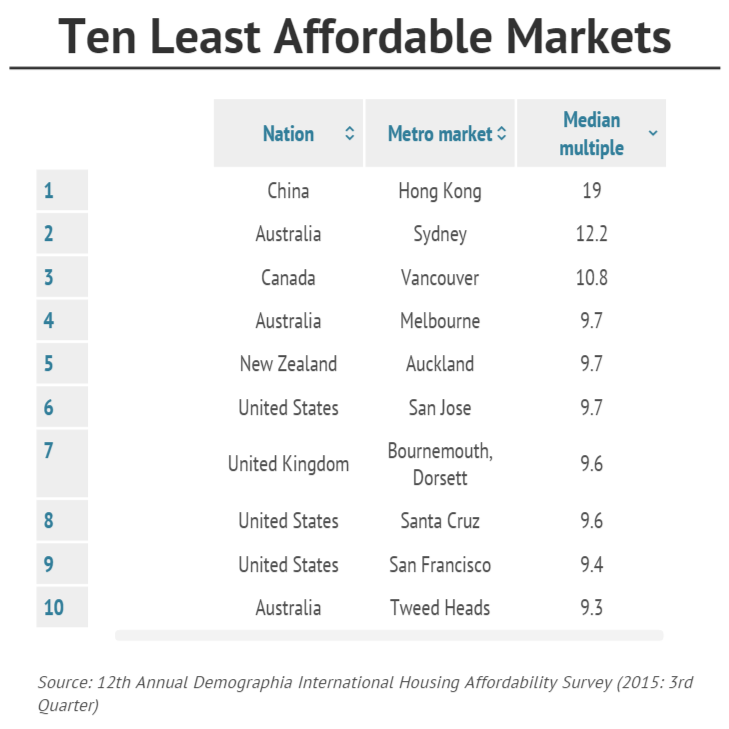
As you can see, the average Sydney income-house price ratio is one of the most expensive in the world.
Comparing income-house price ratios across major cities.
The average Sydney house rent price is currently $530 a week ($27,000 a year) and average Sydney apartment rent price is $500 a week ($26,000 a year).
Similar to the previous examples:
Eastwood: 3 bed house – $630. 3 bed apartment – $635.
Chatswood: 3 bed house – $850. 3 bed apartment – $880.
Strathfield: 3 bed house – $640. 3 bed apartment – $650.
Fairfield: 3 bed house – $450. 3 bed apartment – $450.
And here’s an article – where data shows that average rent costs are taking up a more than a third of weekly income in Sydney.
So.. buying vs renting?
At this current time, I don’t have life experience in either. Buying seems better for the long-term if you intend to stay in the one place, but this requires a heavy upfront deposit and thoughtful commitment. Renting allows for more flexibility and less long-term commitment, but you don’t build any equity – is that sustainable plan for the rest of your life?
What does this all mean?
Ultimately, I think it is up your personal situation and how you interpret the numbers. It will mean different things to different people. It may be a wake-up call and push you start creating a long-term financial plan. It may lead you to some pessimism, and you may concede property ownership is beyond your reach. It may lead you to consider more creative housing solutions.
I think the starting point is to ask yourself – what is important to you?
During my last year of primary school, I was accepted into Sydney Boys High School – a top 5 selective school in the state. This was an unexpected surprise, and I attribute quite a lot of this to luck. I didn’t prepare for the selection school test in any particular way, I was never tutored, I was not pressured academically by my parents, and I did not stand out in primary school. I was a quiet and well-behaved kid, and that was about it.
But here I was, entering one of the most competitive high schools in the state. And I did not fit into the intense academic environment.
From Year 7 to 10, the story was the same every year. I was always in the bottom 20% of the year for test results. I finished dead last in a few subjects. I did not have much interest. Sometimes, I even skipped classes. While it seemed like everyone else was getting extra tutoring every day of the week, I was swimming. I never had a clear vision of what I wanted to do after high school.
The inflection moment came during a mathematics exam.
The mathematics exams were notoriously hard at Sydney Boys High School. The competition was so fierce and the standards were so high. The teachers needed to make the exam papers extremely difficult to differentiate between all the students. In this exam, I remember sitting in the great hall with 200 other people for the 3 hour exam. The exam paper was about 12 pages long.
I understood about 1 page of it… at most.
Vividly, I remember how terrible it felt to sit in the room where everyone else was powering through the questions, and I was just staring down the clock. I was embarrassed for myself. From then on, I subconsciously made the decision to never put myself in that type of situation again.
So from Year 11, I knuckled down and worked to turn it around.
I figured out some of the ground rules to the game. The school testing system rewards memory recall. And I figured there was a strong relationship between the amount of time I spent preparing and the marks I scored.
I figured while I might not be able to compete with the other students in resources or natural talent, I could work at being the hardest worker and putting in the most time.
For the next 2 years, I put my head deep in the books. Every day, from 9am to midnight or sometimes later. This took a lot of mental strength. It was extreme but I saw it as a challenge to myself, as if I had something to prove.
At the same time, this is when we were deciding on what we wanted to study after high school. It seemed like everyone was chasing medicine, law, commerce, or engineering. I never had any real desire to pursue medicine, and it seemed you needed to have genuine reasons to follow that path.
In the end, I decided I wanted to pursue physiotherapy. I had no real experience or idea of what it would be like. But at the time, I figured it was a good mix of health, sport, and science.
The problem was that the ATAR entry requirements was 98+.
I knew I wasn’t even going to come close. I was projected to score in the low 90’s, but I kept pushing hard anyway. My backup option was exercise and sport science, the ATAR entry requirement was about 87. I think most people would have taken their foot off the pedal and cruised their way to the second option, but I kept pushing hard anyway. The months of grinding could have been viewed as a waste of unnecessary effort, but I viewed it as an opportunity to build my self-discipline and mental strength.
In the end, I scored an ATAR of 95. This was a great score, I scored in the top 5% of the state overall! (For reference, this placed me in the middle of the pack at my high school – around 100th out of 200 students). This was huge progress compared to my previous results. But it was not enough for my first option.
I remember one friend who jokingly laughed at me for working so hard at this ultimately unattainable target. I may not have been able to see it clearly then, but the character traits I developed during that time helped me later in life.
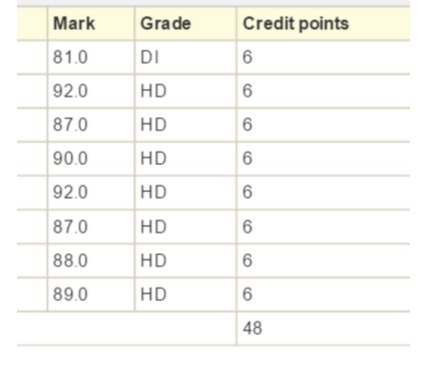
So I started university studying exercise and sport science – with the intention of pursuing physiotherapy down the track. Then something very unexpected happened – I was scoring really high marks at university.
Some of my first year marks.
Perhaps this was because I kept the momentum going after high school, or that I had discovered study techniques that worked well for me, or that my real life sports experience was an advantage in this degree. I think it was a combination of those three factors. This was a completely new feeling for me, to be one of the top students in the cohort, and I just kept the momentum going.
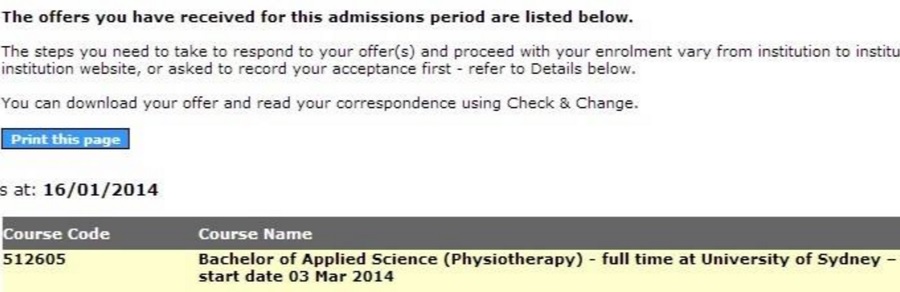
At the end of the year, I applied to transfer into physiotherapy with no real expectations. And I was accepted!
So I am now halfway through the 4-year degree, and it has been a great learning and challenging experience so far. We will see what the future holds.
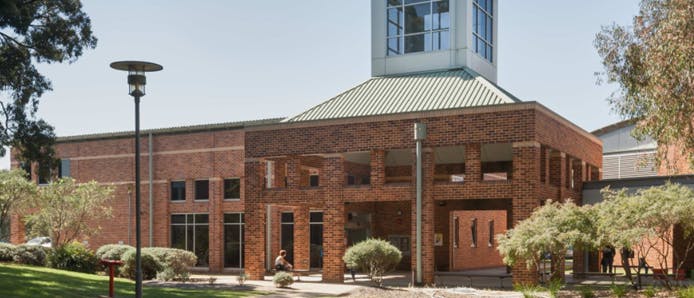
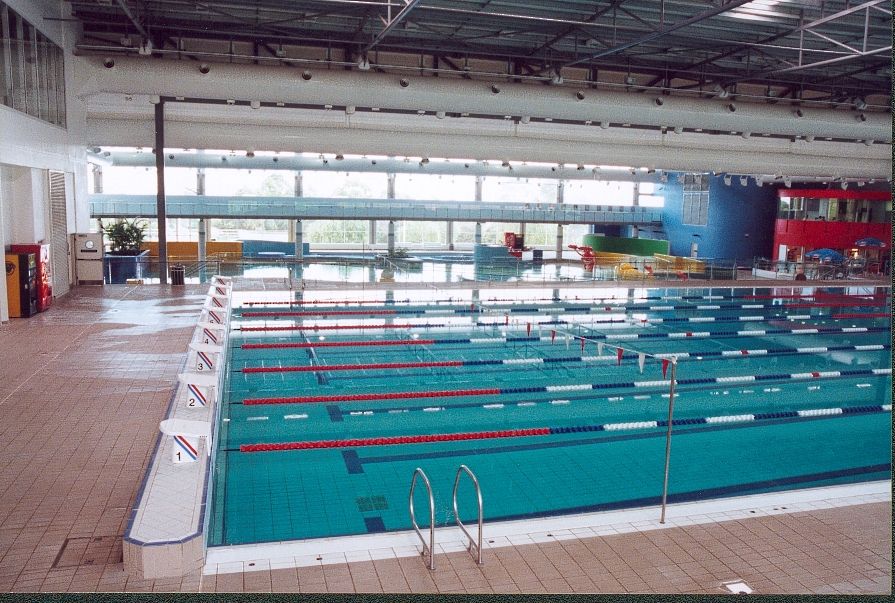
Ryde Aquatic Centre, where I trained almost every day for years.
Context: I competed at a national level in swimming for ~6 years. I trained consistently for 10+ years. For many years, I would train 6-7 times per week, 2 hours per session. I was not the hardest worker or the fastest in our squad, but I did achieve many things.
Swimming is a big reason behind who I am today. It shaped me as a person, the way I think, the way I approach things. It molded my character. It instilled and ingrained many values, lessons and virtues.
These are some of the key things I learnt from swimming:
Discipline To The Bigger Goal
If I could only write about one, this would be it.
Discipline is suppressing your impulsive short-term desires, and the willingness to push yourself through difficult tasks because you have a bigger goal in mind. It is the difference between what you want in the moment and what you really want in the future.
There were so many 4.30am wake-ups where the I would think “I do not want to get up, I just want to go back to sleep”, or so many times when I felt like giving up just 100m into the session, when I knew there was another grinding 6km to go. But I kept pushing forward because it is the “right” thing to do. And I became mentally stronger through the process.
I learnt “motivation” is easy, impulsive and short-lasting. “Discipline” is hard, real and long-lasting. “Motivation” alone will not yield any real results because everything worth having takes constant commitment and consistent hard work.
I am very grateful to have this concept instilled into me at a young age – and it has propelled me forward in other areas of my life.
Identity And Re-invention
Another key lesson I learnt is around self-identity.
It is a common story that former elite athletes struggle with their mental health after they retire. Why is that? I think it is because they let their sport and goal become too attached to their core idea of themselves. I was in a similar mindset for many years, especially when I was very young, where I felt like my only life goal was “to swim at the Olympics”. I had attached the sport of swimming to my personal core identity. The thought of not having “swimming” as my sole focus and purpose was daunting and scary.
However as I matured, my mindset began to evolve. I could see that this mindset was dangerous and too narrow minded. I learnt to slowly detach my core identity from depending on external things. I think the key is to maintain a balance of openness and detachment, while still being committed to put in your best effort to achieve your goals in that moment.
Why is it dangerous and counter-productive to remain attached? Because you are holding yourself back from adapting, progressing, and evolving. As you evolve, you will embody many roles – from the “teenager”, the “university student”, the “swimmer”, the “young adult”, the “working professional”, the “parent”, or wherever your journey may take you. You have to mentally prepare yourself for the evolution between different roles, and not become too attached to the previous roles that you cannot let go.
Because you will need to use your energy and focus to be your best in the present.
Progression is inevitable, and it is a good thing. Be open-minded to new opportunities.
Preparation Is Key
With swimming, there are 2 main parts: training and racing. Training is the preparation and racing is the execution. How swimming works is that the bulk of the serious fitness and strength training happens many months before the big race. Unlike other seasonal sports, swimmers only have a few major competitions each year and the preparation phase is much longer.
The reality is that when you are at the pool on competition day, deep down, you already know how you are going to perform. Because you are know how you prepared for the last few months.
If you know you lack the proper preparation, it doesn’t matter how hard you try on the day, you know where your ceiling is. If you know you did prepare well, that gives you the inner confidence to perform to your potential.
And this is a concept that translates to other areas of life. The execution phase is really just a by-product of your preparation phase. To an inexperienced person, it might seem that the effort is split: 10% preparation 90% execution. But to the experienced person, they know it is split: 90% preparation 10% execution.
That was a key lesson. Learning to put in the hard work, long before it is the day to perform.
A good starting question to ask myself is – “why did I start this blog?”
From my point of view, your 20’s are the most powerful decade in your life. It is when you start to make your own choices. It is the first time you begin to have the freedom to do what you want. It is when you become more independent. It is when you begin to mature mentally and emotionally. It is when you start to become an “adult”.
Your thoughts, choices, habits and actions are beginning to snowball and determine the person you will become, whether you are consciously aware of this or not.
So at naive and young 21 years old now – with very little life experience – I have decided it would be nice to document and share my own journey and experiences – the successes, the failures, the lessons, the struggles, and other things. Reflection is an essential part of growing, so I think this will help “future me” learn and become better. Hopefully, you will find something useful here too.




 Max Chien