#26: On having our first baby

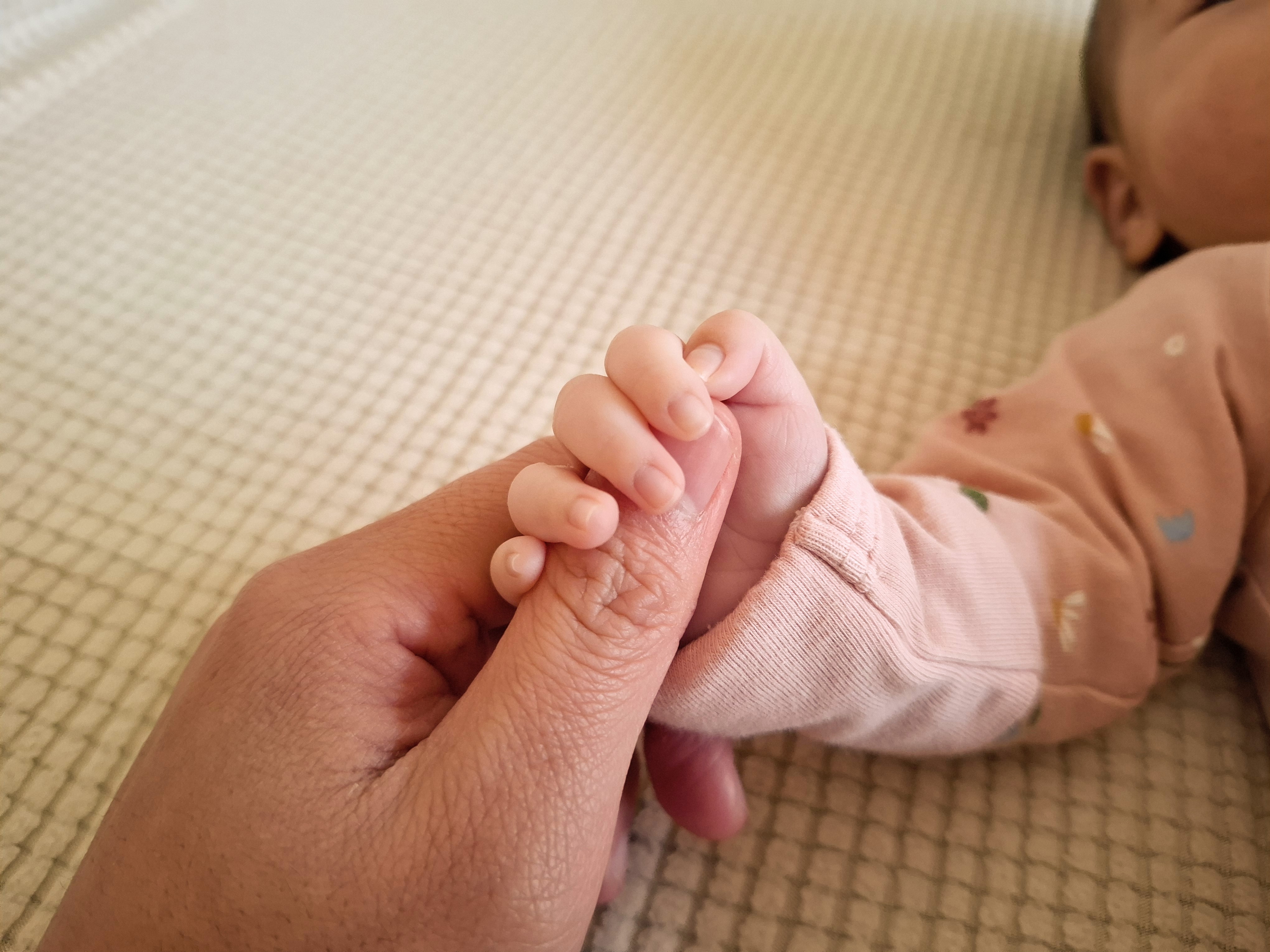
I became a dad.

D gave birth to our first baby, L, a couple months ago. Here are some of my thoughts from this time:

Taking the leap

In my early and mid-twenties, I felt so sure about not having children in the future. It was an extension of my yearning for freedom and independence.

By my late twenties, my thoughts had evolved. Change happens when you reach a tipping point, after contemplations build up over time, until finally a crescendo — yes, let’s take the next step now.

We are both 30 years old now, marking the start of a new decade. A good time to take the leap now.

Superhuman

D’s journey through the pregnancy, the birth, and now caring for her has been Herculean. The pregnancy was a gradual build up to the metamorphosis. The birth was extreme, intense, visceral — pushing her body and mind to its limits, all without pain medication. And now, I am seeing her transition into motherhood, going through a transformation in identity.

Early on, I realised that my role in this journey is in supporting her first. And in doing so, that would create the best foundation for everything else.

For most of adulthood, we do rational things, and we go through similar experiences. This is a moment in time when we diverge, and unexplainable and incredible things happen, and we just go along for the ride.

Abstract ideas

Before she was born, I had all these abstract hopes and anticipations. What our relationship might be one day. What bond and connection we might have.

Then she arrived, a real small human creature, no longer just a fuzzy idea in my imagination. I was unprepared for reality. We did not know what exactly caring for a newborn baby entails. How helpless and dependent she is. But we learn as we go, as new parents do.

And what initially felt like a surprisingly rude awakening, becomes more routine and normal over the weeks. Looking after her through this early newborn stage is the path to be taken, to the future when she will be able to talk, think, be her own person.

New dimension

Before, I wrote that getting married felt like a perceptible step up. Having a baby now feels like entering a new dimension. Everything in my mind has shifted. I am still trying to grasp and understand the change.

It feels like the world has become both smaller and bigger. Smaller — in that my attention has focused on her right in front of me. Other peripheral things have blurred into the background for now. Bigger — in that I am watching something so brand new, so little and growing.

There are also abrupt flashes of intense fear, when I feel the weight of responsibility.

Time passing

I can feel time more acutely now.

Before, time passed at a steady relaxed pace, not many novel things from day to day. Now, time has recalibrated. Clear markers nudge by — she is 3 weeks old, 4 weeks old, 5 weeks old, and so on. Babies grow faster than I expected. Her face changes every day, developing new facial expressions — a tired yawn, a playful smile, a questioning side-eye, a chuckle in her sleep.

Time also stretches and compresses in strange ways. I remember at the 3 week mark, it felt like 3 months had passed. Yet now at 2 months, it feels like that time has passed quickly.

Being on the other side

For my whole life, I have only been the child in the child-parent relationship. Now, I am on the other side. What a strange feeling.

It makes me think of my parents, and how they were at this stage once, where I am right now. And my childhood, how she is where I once was. How could that be?

All those fragments of my childhood, memories and old photos and nostalgia, those are happening in real time for her. It feels surreal. 

Generation to generation

During D’s pregnancy, I read a book, House of Sticks. It is a memoir by a Vietnamese immigrant, recounting her life as her family moved countries. What stood out was how intergenerational traumas are passed down, despite best intentions.

I think about my own experiences. We are the transition generation, as our families moved from one country to another. Our parents did the extraordinary to raise us, balancing the things they carried with them, with experiences of a new place and culture.

And now she is a clean slate, starting from the very beginning. What an opportunity we have, to shape her surrounding world, to shed some things from the past, and carry forward the good things.


#25: On getting married

Denise and I got married last month. It has been 10 years together — from when I was 19 to 29 now.

Here are some of my thoughts on getting married, and reflecting on our relationship:

Love

Love is the highest feeling. What else can be said?

Feeling different

Before getting married, I thought that it would not feel any different being married — we had already been together for many years. I thought it would be just one more day, and the next day the same. But unexpectedly, I do feel different now.

It feels like I have crossed an invisible line, and taken the next step up. It is puzzling how life works. There are lines to step over, but one can never know what it feels like on the other side, until they do it themself. Someone can tell you what it feels like, but words do not mean anything, until one experiences it themself. 

I feel stronger. I feel more empowered. I feel I have more responsibility and duty, to look after Denise. 

Time is fleeting

Time is an illusion. We think of time as concrete, as tangible, as tactile. A form of measurement that can be described, discussed and quantified.

But that’s not how it feels at all. 10 years doesn’t feel like 10 years. I remember moments from the past to the present in equal vividness.

The present is just as mysterious and beyond understanding. We want to sit in moments, take our time to look around and absorb all there is, untouched. But time moves forward, and evaporates the scene.

Photographs help.

Every moment is a choice

Our relationship is a sequence of our choices. Every moment is a choice — which way will we go? Each moment may be small in scale itself, but adds to the great mosaic of the relationship.

Where we go is a sum of the inertia of past choices and the present choice. Good choices make good choices easier.

Being me

Going back to when we first met, the distinct feeling I remember was how I could be me with Denise. The most pure version of me — free, unrestricted, no modifications.

In different settings around different people, I felt pressure to act a certain way, to edit myself in a certain way — parts of me were expressed purely but rarely the whole. 

This was the first time I felt I was me all the time — fully seen and accepted. It was one of those distinct points in one’s life — that splits the timeline, into Before and After.

#24: On running

Modern life is a paradox of balancing comfort and responsibilities. We seek comfort wherever we can. We have soft clothes and beds, controlled temperatures, full bellies, relatively easy city jobs, mandated retirement savings, endless entertainment options. Almost anything one could ask for, at our fingertips.

As we get older, we collect and gather more responsibilities and obligations. Work itself occupies the bulk of our waking time. It is natural to seek comfort and comfort only in our spare time.

With only seeking comfort amongst all our responsibilities, there is no opposite and opposing force. Just comfort itself can lead to a feeling of imbalance. A sense of lethargy, sluggishness, malaise, restlessness.

I stumbled onto running this year. It has been two years since my ankle surgery, and it has been a long gradual process of rehabilitation. I have slowly moved through the stages of progression, from completely non-weight bearing for months, to practicing standing, to hobbling along on crutches, to walking, to jogging, to running.

I rediscovered a familiar feeling of suffering that I had not felt since my young swimming days. A long forgotten feeling, discarded aside after I stopped swimming and began to be occupied by the responsibilities and obligations of my mid-20’s.

The paradox is that you would think that any form of suffering should be avoided at all costs. Yet from this experience, that feels not quite true. Suffering can feel good. Having both opposing forces brings balance, contrast and more colour to everything else in life.

I am a slow beginner runner. But once you start running, it doesn’t matter. The beauty is in the struggle in your own mind, and in your body as one. Each stride is voluntary, and must be committed by you alone. Each stride is an opportunity, a simple choice to stop or to keep going.

There is no momentum to keep you moving forward, and no time for respite. If you don’t take another stride, you will come to a standstill. The suffering is in your heart pumping, lungs heaving, muscles tiring, feet aching, mind protesting. It is uninterrupted and unrelenting.

I just completed my first 21.1km half marathon, two years on from ankle surgery. A milestone that seemed very far away, even just a few months ago. From running this year, I have rediscovered that suffering can be a good thing. It can be balancing force to everything else.

#23: On abundance, scarcity and gratitude

At the end of every year, I reflect and think about the year ahead. This year, I am thinking about motivations.

What is driving our motivations? Are we being driven more by scarcity or abundance?

Scarcity is — “not enough” and “there is not enough”. Scarcity is — “I am not enough until I have [ ], until I have reached [ ], until I have achieved [ ]”. Scarcity is — “I am not complete and whole until I have [ ]”. The flaw in scarcity patterns of thinking is that the goalposts are forever moving. As one is nearing one finish-line, it evaporates, and another one appears somewhere else.

Abundance is — “enough” and “there is enough”. Abundance is — being complete and whole as one is. Abundance is — self-assuredness and confidence in one’s self, and one’s place and journey. Abundance is — pursuing aspirations and improvement, from a foundation of knowing and embracing one’s self.

Scarcity is — fear, tension, nervous, closed off, judgmental, fear of judgment, dismissive, seeking perfection, insatiable. Abundance is — lightness, grace, strength, courage, unforced persistence, being open, acceptance, forgiveness, allowing oneself to enjoy the present.

In the last few years, I have made some major personal breakthroughs in re-wiring my patterns of thinking. I think a rite-of-passage of real adulthood is to examine and renew one’s patterns of thinking. Most of the time, they are unintentionally carried over from our upbringings. Learning to think in new ways is not a one-time process — it asks for consistent and repeated effort. We seek comfort in what we know. But what we already know may not be how we aspire to be.

Past me used to aspire to be “fiercely independent”. I used to think it was “me against the world”. That I was an independent being, trying to make myself in the world. At times, I put walls up. At times, I let scarcity colour my lens of the world.

In more recent years — particularly after my dad’s passing, I realised that was not the best way to think and be. I am not independent — I am a part of a larger abundant experience. I am a part of the people around me, and the people I haven’t met yet. I am just one in the flow of many now. I am one in the flow of the generations before me. I am one here because of the disciplines of humankind developed before me — of science, philosophy, language, history, medicine, art, family, love, to name a few.

Gratitude is a necessary foundation of a good life. Past me would not have been able to fully grasp this. Now I am more aware of this each day.

We are the lucky ones. This is a reminder to myself to live with abundance and gratitude.

#22: On navigating my mid to late 20’s

Recently, I had an epiphany.

I realised that so many of the great books and stories I read, and the films and shows I watch can be distilled down to the same singular question and theme — how much control does one feel like they have in their own life?

This question and theme coincidences with what I have been reflecting on lately.

On the last 15 years, I can look at my life in 3 phases. Firstly, my teenage years, when the dominant themes were around looking for peer acceptance, and searching to fit in and “look cool”. Secondly, my early 20’s, when the dominant themes were around self reinvention, experimentation, some more self assuredness, and trying to plan and conceptualise what post-university life would be like. Thirdly, now my mid to late 20’s, one of the dominant themes is grappling with this concept of “sense of control”.

My current theory is that this idea of “sense of control” is an internal feeling based on many underlying factors, including:

  • Current state of your life, relative to your aspirations and expectations
  • Some projections on the future trajectory of your life
  • Being yourself, and degree to which you feel like you can express yourself
  • Internal dialogue, and your day-to-day state of mind
  • Independence, physically and mentally
  • Resilience, and your ability to deal with adversity
  • Self acceptance, and self belief
  • Relationship with your past
  • How you respond to the expectations of others
  • Primary motivations
  • Whether you can make sense of the world, and your place in it

Here are some of my thoughts on this:

Habits and choices

I often think of this quote, “Hard choices, easy life. Easy choices, hard life.” It simplifies the often true dynamic that difficult choices in the short-term, often lead to better outcomes in the long-term — whereas easier and more pleasant choices in the short-term, often lead to worse outcomes in the long-term.

This is often true in universal areas of health, money, relationships. It is something I try remind myself of. The tricky part is finding the right balance. How do you balance enjoying the present, with preparing for the future? How do you balance pleasant choices, with unpleasant choices?

Home ownership 

Home ownership is one of the check-boxes of a “good and comfortable” life. Like a few other check-boxes, it may not necessarily be an ingredient of happiness, but the absence of it may be an ingredient of unhappiness. As a simplification, there are two points on a spectrum of home ownership. The first threshold would be a place that meets living necessities. The second threshold would be a place that is varying levels of desirable.

Depending on one’s circumstances, a common feeling among our generation is that the one or both of these levels of home ownership are increasingly difficult or unattainable. It feels like a unique-to-our-generation paradox — where we are both living in the most pleasant and prosperous time and place in history, and yet we are also facing what feels like overwhelming barriers to home ownership in the same places we grew up. Is this a reasonable perspective, or are we asking for too much? But in saying that, the only path forward is to play with the cards we are each dealt.

Health and vitality

From my past experiences, the level of my health can be abstracted into 3 zones.

1. Zone of Vitality
2. Zone of Neutrality
3. Zone of Limitations and Dependence

In the last 15 years, I have experienced all 3 zones. In my competitive swimming years, I felt very much in that first zone. In my 20’s, I fell into the second zone. And with recent injuries and surgery, I fell further into the third zone. Now rehabbing and getting back into exercise, I have felt some unexpected brief and joyous moments of being in that first zone for the first time in many years.

I have realised the benefits of exercise and good health are not just confined to the activity itself. Our bodies are the vessels we each live in. That feeling of vitality is an amplifying foundation for everything else we experience day-to-day. At present, I am on a personal journey to rebuild my health.

Work and trade-offs

Work, and one’s relationship with work, is a Pandora’s box. Once you begin to ask some deeper questions, it is not easy to find answers.

What does one try to pursue? Novelty or stability? Altruism or self-interests? Structure or freedom? Status or freedom? Variety or mastery? Uncertainty or certainty? Is work a means or an end? Is one at peace with work in its modern form?

Each different type of approach comes with its own trade-offs. There is no one optimal approach. My inkling (may be incorrect) is that past generations had a narrower focus on working for their immediate survival. And in more modern times, our generation is fortunate to consider possibilities beyond questions of our immediate survival, and this good fortune comes with bigger existential questions.

Internal thoughts and courage

The space between our thoughts and our interpretation on reality, and reality itself is where our self agency lies. We can, consciously or subconsciously, choose our own thoughts within that empty space. It takes courage to accept that we have that choice, and then courage again to make the conscious choice. This is something I have had to repeatedly learn and relearn again.

That same courage is required with our relationships with the past. We all have past traumas that we carry subconsciously into the present. It takes courage to face these. In recent times, I have faced some of these traumas and made some strides with my relationship with the past. Nevertheless, this is an ongoing journey.

Living in the present

The past phases of life often had sets of directions and guard rails. This current phase of life feels bigger, more open, and more ambiguous. It requires us to learn different ways to navigate our way around. And there is no one right answer on how best to do so.

I think a common trap is to “live in the future” — whether that be worrying, fantasizing, anticipating, or planning. I often catch myself in these types of thoughts. It is an easy form of escapism.

I am finding one of main lessons from this phase of life so far, is to learn to slow down and appreciate the present, and all the current struggles and progresses as they are. This is a reminder to myself that this current climb up my personal mountain is what there is to enjoy, not waiting for some future summit.

#21: On my surgery experience and recovery

I have reached the 6 month milestone of my ankle surgery.

Some time ago, I severely rolled my ankle in an unlucky accident (I had heard a loud snap sound too). For many months, I attempted to rehab the injury myself but something was not quite right. There was sharp persistent pain that was not getting better with time.

Eventually, I went to see a specialised surgeon. He was able to pinpoint and explain a diagnosis that was quite uncommon but matched what I felt. I was booked for surgery quickly after.

The surgery was for “excision of accessory navicular and tibialis posterior advancement repair”. In essence, one of the small bones in my foot had snapped off the main bone and become unstable. This was the cause of the persistent pain. They would remove the small bone, and transfer the muscle tendon attachment to another bone.

The surgery was successful. Recovery was tough, as I was told to expect. Post-surgery, I was completely non-weight bearing for 6 weeks, and had to wear the protective moon boot for 12 weeks. I jabbed myself in the stomach with blood-thinning medication every day for 6 weeks.

It is now 6 months post-surgery. I am about 40%(?) of normal function. The original issue seems to have been resolved, which is a huge relief. Now I am just working to build back to a level where I will be able to jump and run again. This is expected to be more in the 12 months timeframe.

Graphic warning: Before and after photos

Here are some of the things I learned from my experience:

Nausea

By pure coincidence, I had recently read a book “Complications: A Surgeon’s Notes on an Imperfect Science” on various perplexing medical phenomenons. There was a whole chapter on nausea – the TL;DR is that nausea is the second most common medical complaint patients have (the most common being pain), and is often overlooked because there is no real cure for it. It is ranked the worst part of chemotherapy treatment by patients, and can affect pregnant women so badly that it is the surprising reason many women don’t want to have children again.

Unknown to me prior to this experience, I react very nauseously to fentanyl and other strong pain-killers. By the time I came to this realisation in the hospital, it was already too late. I was already so pumped up on these pain-killers that I was in an extremely nauseous state and vomiting for the 48 hours post-surgery. The irony as I was recalling what I had just read, and experiencing severe nausea first hand! It is as bad as they said.

Patience and time

During each step of this process, it is easy to get caught up in the present. Pain fixes your mind to only see the present. There is already very little noticeable progress and difference from one day to the next. Pain in the present makes it even more difficult to imagine any progress and where my recovery could be a few weeks from now, or a few months from now. 

But time nudges us forward. As the days stretched into weeks, I started to notice small differences in the pain and swelling. As the weeks stretch into months, I can see some progress that was so hard to visualise before. This would be a good reminder for other difficult circumstances in life that seem to trap our thoughts to only the present. Time most often comes with change.

Improvement

Recovery and rehab is following a predictable pattern. The human body is mostly the same for everyone. Muscles function a certain way, nerves work a certain way, bones heal a certain way, medicines interact a certain way.

My rehab experience is just about following a simple formula.
1. Stressing my body to its current limit.
2. Resting to allow my body to recover and adapt.
3. Repeat.

At the beginning, this was taking my foot out of the boot for a few minutes a day. Then, just moving my ankle a couple centimetres up and down. Then, gently putting some body weight through the moon boot. Then gradually, walking a few minutes at a time. For each stage, I had to push to the limits of pain. And gradually, my body would allow me to do a little more.

It’s a lot of repetition and there is no real shortcut.

Appreciating small things

Post-surgery, I had my usual autonomy and independence stripped away. 

I came to appreciate the small things. Transitioning from a rigid permanent cast to a more cushioned moon boot. The few minutes a day I could remove the boot to wiggle my toes. Sitting in the sun and getting fresh air. The slow subsiding of excruciating pain and swelling.  

The first time being able to put weight through that foot. The first time being able to move around the house without assistance or supervision. The first time being able to sleep without the cast or boot on. The first time walking outside in many months.

There was a fresh sense of wonder and pleasure in rediscovering and regaining these things again.

Privileges and luck

For all the unfortunateness of the injury, there are so many privileges and so much luck that allowed me to be where I am today, 6 months post-surgery. Privileges of modern medicine – modern techniques, technologies, medicines, and all the countless inventions and progress that would have seemed impossible decades ago. 

Luck with having the surgery just before the start of the 3 month Delta lockdown in Sydney. With good timing, I was able to have the surgery without postponing or additional worries. I was able to have family as visitors during my hospital stay, and my mum was able to help me at home post-surgery. 

Privileges of having paid leave and being able to work from home during my recovery. Privileges of having private health insurance which allowed me to have the surgery on short notice. And privileges of having access to skilled physiotherapists to help guide my rehab process.

Final thoughts

Overall, I am really glad the surgery has been done. Before the diagnosis and surgery, I had half-resigned myself to the worst-case scenario that I would just have to live with the injury forever. Now it feels like I have been blessed with a lucky break, that I somehow stumbled onto a promising solution to a difficult problem. It’s a long journey, but it feels like all signs are pointing to a light at the end of the tunnel.

#20: On the good stuff I learnt from my dad

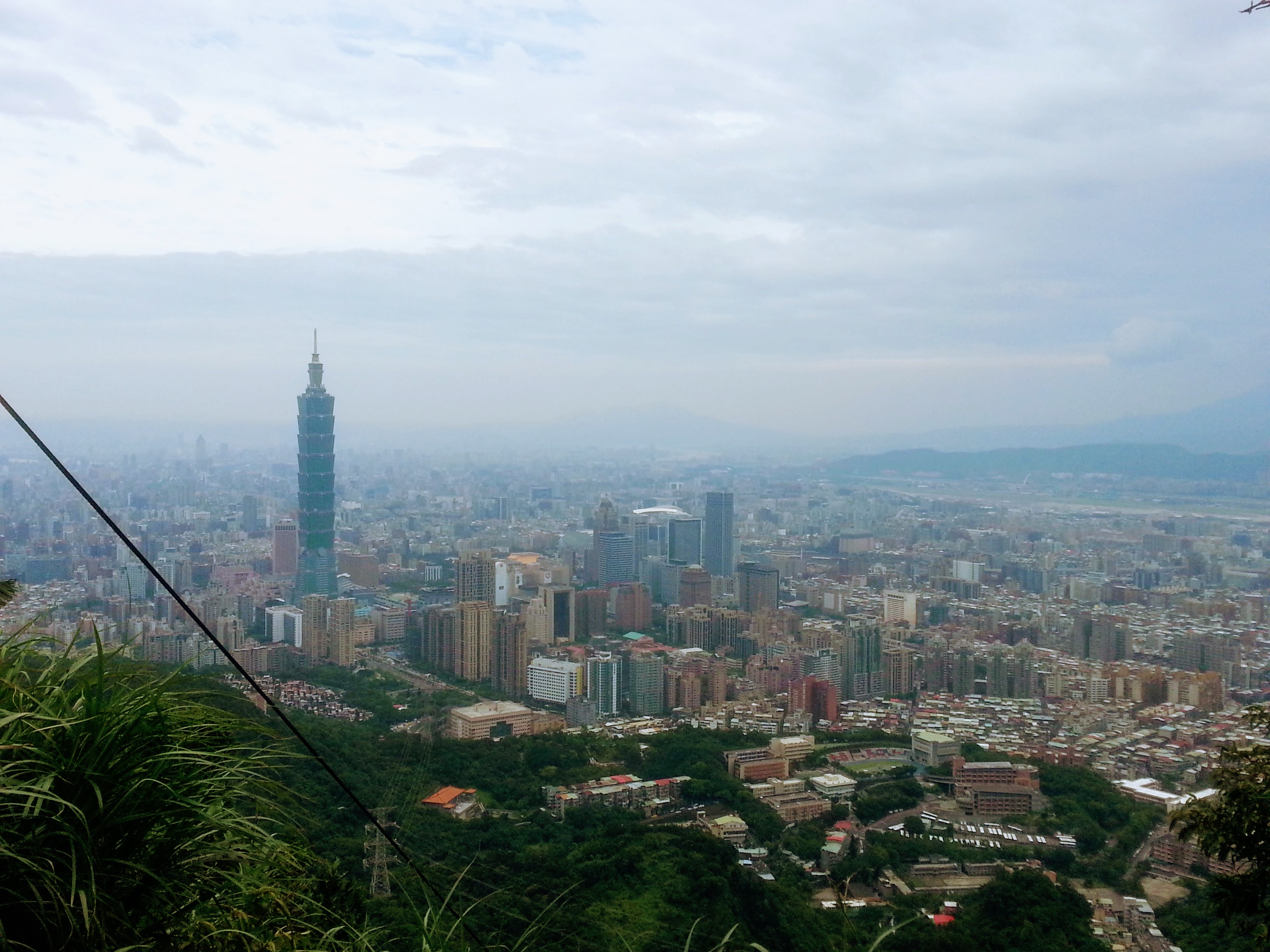
taipei-101
Overlooking Taipei, from one of our trips.

In the immediate moments after my dad passing away, I felt a flood of warm bittersweet feelings pouring in, reminiscing on the good memories. It was a reflex that I did not expect. It felt like I was just a passenger on a ride. As if the dormant ride conductor in my head knew what to do, the gears in my head turned, and I was taken on a tour of the good past memories.

I reflected a lot on my childhood. It was during that time that I spent the most time with my dad, and learnt the foundational lessons from my parents. Thinking back, as a young boy I learnt more by observing than by instruction. I think that is how children learn, by osmosis, by absorbing their surroundings. These core values that we subconsciously absorb as children shape part of the people we later become. It is important that as we develop our own critical thinking, we re-examine those values, build on the values we want to keep, and shed the values we want to discard. Through this reflecting, I have a greater appreciation for my dad. I understand better now that we cannot separate the strengths and flaws within people, and all we can do is accept and appreciate them for who they are.

Frugality and the value of money

From what I understand, he grew up with a big family on a rural mountain farm. It was tough, and they did not have much to go around. By necessity, this created a “survival” mentality. Later in life, he immigrated to Australia. I think the following is a common storyline for many immigrant families. They restarted life in a new country, without being natural English speakers, without many family connections, without many social connections, and with less generational resources than their neighbours. Again by necessity, this fostered the need to be extremely resourceful. Every dollar needed to be stretched. Every material item needed to be used to its full lifespan before being replaced. If there was a more affordable option that could do the same thing, then go with that one.

From these childhood experiences, I think I have learnt the value of money. This has formed a strong foundation of first-hand experience that has fueled me to learn how to manage my own money.

Self belief and encouragement

He was my first supporter. My mum was more of the listener and confidant, my dad was more of the encourager. Like many other fathers and sons, he always told me that he believed in me and that I was special. It is hard to quantify what effect that had on me as a young boy growing up. I think hearing that repeatedly, I did embody some of that and it did give me some deep intangible level of self belief that we all need in everyday life. This is something I took for granted at that time. But looking back, I was lucky to have someone in my corner encouraging me on.

Consistency and responsibility

Every day for many years, he would drive my brother and me to and from swimming training. Many of those days were at 4.45am in the morning on weekdays, or at 5.45am on Saturdays. He would drive me to the train station every morning to go to school. He was there at every swimming competition. As a young boy, I thought this was quite normal. In hindsight, this was an uncommon example of consistency and a very big sacrifice on his part. Another example was that he always wanted the family to have dinner together, even as we grew older. 

Seeing this as an example was likely a formative cornerstone in my own development, directly and indirectly. In direct ways, perhaps I would not have been so committed to swimming and other pursuits had he not been so consistent with his portion of the responsibilities. His consistency made me more accountable with my responsibilities. In indirect ways, I think this quality has seeped into other areas of my life. One of the qualities that comes more naturally to me as a person is being consistent with what I have set my mind to. Oftentimes, I feel a sort of responsibility or duty to follow through, and I suspect this is part of where that originates from.

Relationships

As a teenager, his parents divorced. From what I understand, this had quite a negative impact on him and his siblings. I think this influenced how he wanted to raise his own family, and what he thought was important. He was adamant that we (the children) come first in the family, and that separation or divorce was not an easy way out during hard times. Like all parents, I watched my mum and dad go through rough patches and dark periods. Like every kid, I had moments where I just wanted an argument to stop and thought it would all be easier if they just split up. But they always stuck through it, and found ways to work around the issues.

Again by example, I have absorbed some of those values. In my own relationship (as in all relationships), there are moments where different people from different backgrounds would handle differently. Perhaps if I had a different upbringing, I would have felt the “normal” or “right” approach would be to take the exit. But because of my upbringing, my default option has always been to work on the issues at hand, and come out better on the other side.

Question for you

I think it is healthy that to share and talk about these experiences. What are some of the lessons you have learnt from your parents?

#19: On the passing on my dad

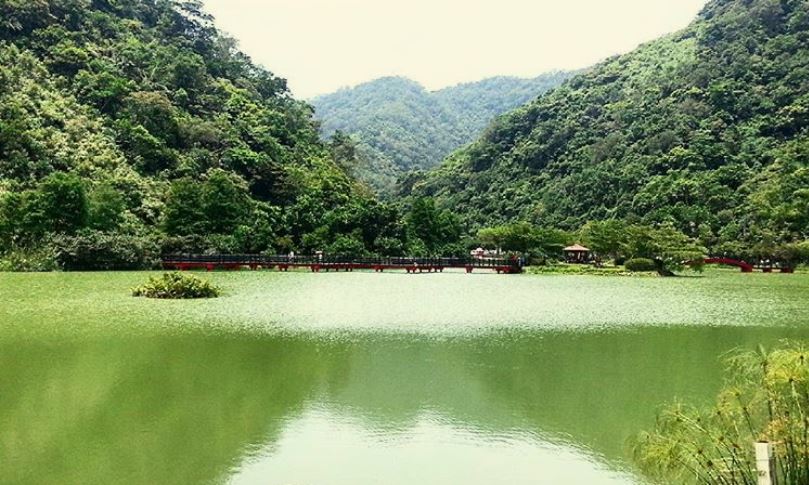
taiwan-lake
Somewhere in Taiwan, from one of our trips.

A few months ago, my dad passed away unexpectedly. It has been a roller-coaster of swirling emotions since. It still feels surreal. Did that really happen? How am I supposed to feel? Is that how that story ends?

Now I am left to my own thoughts, trying to organise them, trying to make sense of what has happened. Over the years, I have discovered the wonderful practice of writing. Writing is a way to create separation from your thoughts. To get them out of your head, to put them concretely on paper, to see them clearly, to organise them piece by piece. Writing is a way to be more truthful to yourself. You may be able to be lie to yourself in your head, but writing words on paper demands honesty and accountability. Two quotes come to mind. One is “Writing is the antidote to confusion“. The other is a quote from Haruki Murakami, “I don’t necessarily write down what I’m thinking; it’s just that as I write I think about things”. Writing is a medium for your stream of consciousness to flow through. So that is what I have been doing.

Now in the aftermath of what has happened, the dust is beginning to settle. Through writing and writing some more, I feel I can share some of the main distilled things I have learnt during this time.

All humans are flawed

Over the years, I watched him struggle on and off with his flaws, his shortcomings, and his own demons. In many ways, I held onto resentment and frustration over those things. I wished he would change for the better, someday in the future. There were times I fantasied that he would become a different person, some sort of perfect version of himself. I naively believed that there would be a redemption narrative arc. Subconsciously, I must have had a mental model that we can all overcome our shortcomings and flaws. That we face adversity and make mistakes, and we can overcome and make things right. That we can right all our wrongs and tie up all our unfinished threads before our time is up.

But it was not to be. His story and journey ended abruptly there. That is the end of the story. This was a big reality check, and my worldview has been fundamentally shifted now. My new worldview (that I am still trying to make sense of) is that all humans are flawed. Flawed in our own individual ways. I realise now that this is an inherent quality of being human. I realise now that we all want to be better and to improve. We do the best with the the tools and resources we are given, and some people just happen to have more than others. In hindsight, I trust he did the best with the tools he had. There is no attainable finish line. We are all walking the same path. We are born an imperfect work-in-progress, and die an imperfect work-in-progress. Now I see the people around me through a different lens than before.

Life is finite

This is the first time experiencing the death of someone close to me. This has fundamentally shifted how I think about time. In my 26 years of life, my default worldview has always been “there is always tomorrow”. Whether it was having that difficult conversation, reaching out to an old friend, mending that relationship, starting that new habit, working on that new project – “there is always tomorrow”. It was as if it was an unquestionable reality of life.

In this case, my internal thought process after another argument or disagreement was – “there is always tomorrow”. Those same problems will be there tomorrow, and the same opportunity to work on fixing those problems will be there tomorrow too. Until I got snapped back to reality, and there is no more tomorrows. The conveyor belt of time that I assumed would be running forever, stopped.

Now I am more conscious of the finite nature of time, and trying to consciously take advantage of the present moment. This is very much a work-in-progress, as I am actively navigating this new head space.

Relationships are (maybe) the most important thing

The most surreal moment was one week after his death. He was cremated and we took the urn to scatter his ashes. We opened the urn and I saw the mound of fine burnt ash inside. It looked like fine grains of grey sand. It was a surreal moment. I thought to myself, “Is that it? Is this what it all amounts to in the end?“. The culmination of his entire life – all his time, memories, experiences, the good moments, the bad moments – and this is all it amounts to in the end?

What really matters in the end then? That you made the most of your time? Did that exam result matter? Did that extra job promotion matter? Did that slightly nicer car matter? Did that extra bit of money matter? Did that person who cut in front of you this morning, leaving you in a huff, matter? It seems like perhaps most these things, like a job or money, are a means to an end, not an end in itself. I think it is easy to get caught up in thinking these things are an end in itself. I do not quite have a satisfactory answer right now for “what matters in the end?”. But the closest answer I have right now is spending time with the people you love, spending time doing the things you love, and enjoying the present moment.

#17: On thoughts during the coronavirus pandemic

At the time of writing, 31 March 2020, there are 784,381 confirmed cases and 37,780 confirmed deaths across the world.

Here are some of my unfiltered thoughts and observations from the past few weeks:

  • Understanding compound growth

The human mind is not wired to understand compound growth intuitively.

Linear growth is simple. What is the end total when you start with 1000 and add 1000 per day, for 10 days?

Whereas compound growth is fuzzy and vague. What is the end total when you start with 1000 and compound 50% per day, for 10 days?

  • “Panic buying”?

I don’t think there is such a thing as “panic buying”. I think we act in accordance with how we think others will act.

If we think others are buying more than their usual amount, then it is rational for you to buy more than your usual amount, knowing that if you do not, then the item you need in the future will not be available.

My untested theory is that there is no objective moral standard for human behaviour.

  • Walking and exercise

Since working from home and the gym being closed, I have been walking everyday. I am surprised when I see many others out doing the same.

When we strip away all the excess and luxury of daily life, we gravitate towards one of the most basic activities of being human.

Walking and movement is at the core of the human experience.

  • Personal finance, emergency funds, and understanding risk

This crisis has highlighted the importance of understanding personal finance. One of the fundamentals is an “emergency fund”. An “emergency fund” is having 6 to 12 months worth of regular expenses saved up, untouched at all times.

You might think that is unnecessary or excessive – why do I need that? Well, for unexpected situations like this.

An “emergency fund” is for those 1 in 100 or 1 in 1000 events. Because after this current crisis, there will be another unexpected event in the future, and another one, and another one…

  • I could be working in those ICU’s…

In an alternate universe, I could be working in ICU’s with those affected people right now. What a surreal thought.

As a student, I completed placements in ICU’s working with mechanically ventilated patients, treating severe pneumonia and the like.

At the same time, I am selfishly glad that I am not in that workplace now, and yet extremely grateful for those who are putting themselves at the frontline of healthcare to help others.

  • Invisible effects

It is hard to appreciate actions that lead to invisible effects.

Suppose there are police patrolling the neighbourhood. And there is no crime happening.

Is there no crime happening because there is police patrolling the neighbourhood, or would no crime have happened regardless if the police were patrolling or not?

It is impossible to say. We only live in one timeline.

Likewise, it will be hard to determine the effects of our actions when we have no other timeline to compare against.

  • Adapting and shifting focus

It is easy to fall into the auto-pilot loop of everyday routine, and incremental progress towards set goals.

But setbacks are inevitable. They should be seen as the rule, not the outlier. And we must adapt when they occur.

For example, I was on an auto-pilot loop of aiming to building my strength and ability in the gym. Quickly, I had to realise this was no longer possible. So I adapted my focus to exercise for general wellbeing.

  • Thinking for yourself

One key lesson from this crisis is the importance of thinking for yourself.

Authorities all over the world have been slow to react on the available information. Relying purely on trickle down decisions from large institutions is not ideal.

There is great power in reading between the lines and connecting the dots for yourself.

What are some of your thoughts at this time?

#16: On the art of sculpting your life

Source.

Life is art. There are no rules. There is no defined goal. There are no formulas. There are no definitions. There is no right or wrong. There is no good or bad. Societal concepts of success and failure are simply illusions. Life is what you make of it. 

Closed Games vs Open Games
Closed Games

From birth to our early 20’s, we start our life in closed games – mainly school, and extra-curriculars such as sports and music. 

There are defined rules and boundaries. There are clear goals shared by everyone. There is a clear hierarchy. We know where we stand compared to others, and this is comforting, even if we are not at the top of the ladder. There are traditional authority figures, with more experience in this closed game, to guide us along the way.

Most importantly, there is a strong causal relationship between what we put in and what we get out. The more time and effort you put in, the more we improve, the more we succeed. 

Some examples:

  • Students who study four hours a day get better results than students who study two hours a day.
  • Athletes who train ten hours a week get better results than athletes who train six hours a week.
  • Musicians who practice every day get better results than musicians who practice every third day.

There is a formula to follow. There is a scoreboard to observe. Those who succeed against the formula are the exception, not the rule.

Closed games are a science.

Open Games

After we finish our formal schooling, we are thrust into a new arena. The open game of the rest of life. 

There are no defined rules and boundaries. There are no clear goals shared by everyone. There are no authority figures to guide us. They may offer anecdotal advice, but they cannot truly guide us. This is disorienting, overwhelming, and freeing. 

I think the key difference is that there is no strong causal relationship between input and output. 

Some examples:

  • In dating and relationships: spending more time and effort does not have a strong causal relationship with finding your ideal partner. Those who spend four hours a week searching do not get better results than those who spend two hours a week. Those who try harder do not get better results than those who try lesser. Time are effort are not the key variable here.
  • In work and jobs: investing more time and effort does not have a strong causal relationship with work satisfaction or financial success. Those who work in minimum wage retail, hospitality, customer service, or manual labour jobs work as many hours and as hard as those in six-figure white collar professional jobs. Likewise, working longer or harder does not lead to higher work fulfillment or satisfaction. Time and effort are not the key variable here.

Without a structured environment, we seek short-term visible hierarchical games for refuge. Social media games, chasing popularity and status. Corporate workplace games, chasing titles and ranking. We seek the closed structure and scoreboards. However, these games are ultimately a mirage. Short-term and two-dimensional. They do not translate well to long-term happiness or contentment.

The truth is there are no rules, boundaries, or formulas. There are no scoreboards. There are no determining variables. Your happiness is a messy concoction of your attitude, your sense of self worth, your expectations, your predispositions, your biochemistry, your self awareness, your circumstances, and your luck.

Open games are an art.

Where To Start In Open Games 

So where do we start in this directionless game of life?

I don’t know. No one knows. I suppose that is the point.

Perhaps the best place to start is with the fundamentals. The aspects that are fully in our control.

Our health. This is shaped by what you are inputting and outputting of our body. The food we eat, the exercise routine we do, the sleep routine you follow.

Our thoughts and our worldview. This is shaped by what we are exposed to. The books we read, the videos we watch, the music we listen to, the people we hear, the internal dialogue we engage. 

Our finances. This is shaped by the inflow and outflow of our bank account. The money we spend, the investments we make.

Sculpting Your Life

From birth to your early 20’s, we are but a giant wet block of clay. Made and formed by ourself and the outside forces around us.

In your early 20’s, we assume full responsibility for this block of clay. For the next 60 years or so, our life’s task is to create our sculpture.

Day by day, our choices and our actions shape our block of clay. Hands deep in our clay. Pushing, pulling, moulding, sculpting.

Day to day, week to week, month to month, it can be difficult to see the progress.

Year to year, decade to decade, our sculpture takes shape.