

Your outcomes are a lagging measure of your habits. Your net worth is a lagging measure of your financial habits. Your weight is a lagging measure of your eating habits. Your knowledge is a lagging measure of your learning habits. Your energy is a lagging measure of your sleep habits. Your fitness is a lagging measure of your exercise habits. You get what you repeat. – James Clear
There’s an old Hindu saying that comes into my mind occasionally: “For the first 30 years of your life, you make your habits. For the last 30 years of your life, your habits make you.” – Steve Jobs, 1985.
. . .
Everyday, we face thousands of small decisions.
What time do we wake up? What do we do when we wake up? What are our thoughts in the morning? What do we think of ourselves? What do we think of others? How do we feel? What clothes do we wear today? When do we first eat? What do we eat? Who do we talk to? How do we talk to them? What do we talk about? And there are another thousand tiny decisions to make throughout the day.
But we don’t have the brain power to make these choices independently each day. So we rely on your habits. We fall back to what we’ve done in the past. We are habitual creatures.
Compounding habits
Habits compound. You might not see the effects of something small each day. But after thousands and thousands of repetitions, the effects are huge.
Our repetition of habits build on top of each other, day by day.
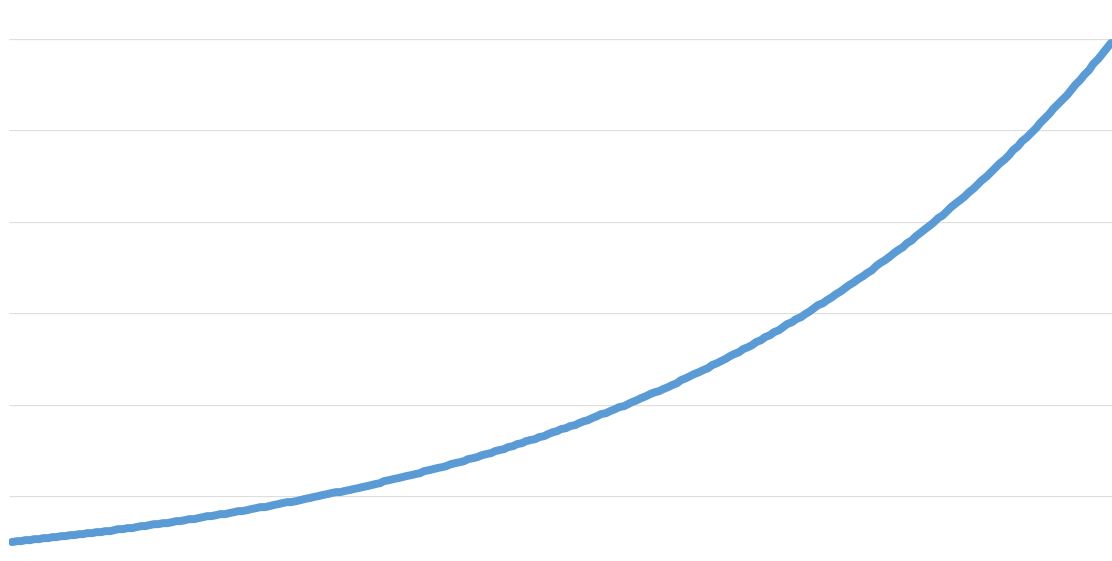
I think there are two broad phases with our habits.
The first phase is slow progress. Putting in that initial time and effort into creating good habits. By taking the time to carve that path into the mountain, we can better control the flow of water in the future.
The second phase is more automatic. Once habits are ingrained, it becomes easier to follow established habits. Unconsciously, results begin to compound. Water always follows the easiest path down any mountain.
In health
I practice intermittent fasting (usually, I eat between 12pm – 7pm). There are many health benefits. But even without this new mainstream evidence, I have always gravitated towards not eating in the morning. Generally, I do not have an appetite in the morning, and my mind and body is always feel sharper when I do not eat.
I go to the gym four or so times a week. This is a new habit that I have started this year. This has become one of my favourite things to do, and has made the big impact on how much better I feel mentally.
In wealth
I save and invest as much as I can, and avoid spending money on unnecessary things as much as I can. Rather than fall to impulses, I ask myself “Do I really need this? Will this bring my lasting happiness?”. Over time, it becomes more natural to realise that most shiny new things will not make you truly happy, and you can be more selective about the things that will.
In relationships
Being in a long term relationship, I try my best to promote good habits and patterns. In the early stages, both sides have to be vulnerable and have set some boundaries on hard questions such as – how are we going to deal with conflict? How are we going to communicate? What is important to you in a relationship?
After there is a strong foundation, the journey becomes smoother. There is the foundation for more intimacy and growth together.
Not a bragging contest
Habits are not a bragging contest. Your habits should be sustainable and enjoyable. Personalised to you. There is no point in forcing yourself to do something you know you cannot sustain, or something you do not enjoy. You should feel better after doing them, not worse.
Question for you
What are some healthy habits that you feel help you? What are some unhealthy habits that you want to improve?
 Max Chien
“We are what we repeatedly do. Excellence, then, is not an act, but a habit.” – Will Durant (inspired by Aristotle)
LikeLike