
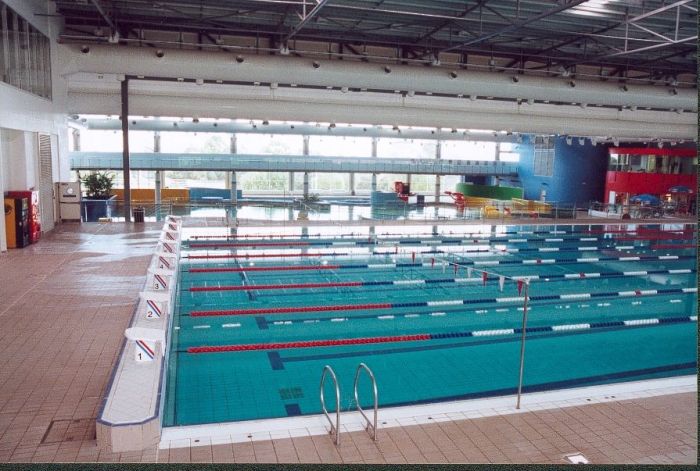
Context: I competed at a national level in swimming for ~6 years. I trained consistently for 10+ years. For many years, I would train 6-7 times per week, 2 hours per session. I was not the hardest worker or the fastest in our squad, but I did achieve many things.
Swimming is a big reason behind who I am today. It shaped me as a person, the way I think, the way I approach things. It molded my character. It instilled and ingrained many values, lessons and virtues.
These are some of the key things I learnt from swimming:
Discipline To The Bigger Goal
If I could only write about one, this would be it.
Discipline is suppressing your impulsive short-term desires, and the willingness to push yourself through difficult tasks because you have a bigger goal in mind. It is the difference between what you want in the moment and what you really want in the future.
There were so many 4.30am wake-ups where the I would think “I do not want to get up, I just want to go back to sleep”, or so many times when I felt like giving up just 100m into the session, when I knew there was another grinding 6km to go. But I kept pushing forward because it is the “right” thing to do. And I became mentally stronger through the process.
I learnt “motivation” is easy, impulsive and short-lasting. “Discipline” is hard, real and long-lasting. “Motivation” alone will not yield any real results because everything worth having takes constant commitment and consistent hard work.
I am very grateful to have this concept instilled into me at a young age – and it has propelled me forward in other areas of my life.
Identity And Re-invention
Another key lesson I learnt is around self-identity.
It is a common story that former elite athletes struggle with their mental health after they retire. Why is that? I think it is because they let their sport and goal become too attached to their core idea of themselves. I was in a similar mindset for many years, especially when I was very young, where I felt like my only life goal was “to swim at the Olympics”. I had attached the sport of swimming to my personal core identity. The thought of not having “swimming” as my sole focus and purpose was daunting and scary.
However as I matured, my mindset began to evolve. I could see that this mindset was dangerous and too narrow minded. I learnt to slowly detach my core identity from depending on external things. I think the key is to maintain a balance of openness and detachment, while still being committed to put in your best effort to achieve your goals in that moment.
Why is it dangerous and counter-productive to remain attached? Because you are holding yourself back from adapting, progressing, and evolving. As you evolve, you will embody many roles – from the “teenager”, the “university student”, the “swimmer”, the “young adult”, the “working professional”, the “parent”, or wherever your journey may take you. You have to mentally prepare yourself for the evolution between different roles, and not become too attached to the previous roles that you cannot let go.
Because you will need to use your energy and focus to be your best in the present.
Progression is inevitable, and it is a good thing. Be open-minded to new opportunities.
Preparation Is Key
With swimming, there are 2 main parts: training and racing. Training is the preparation and racing is the execution. How swimming works is that the bulk of the serious fitness and strength training happens many months before the big race. Unlike other seasonal sports, swimmers only have a few major competitions each year and the preparation phase is much longer.
The reality is that when you are at the pool on competition day, deep down, you already know how you are going to perform. Because you are know how you prepared for the last few months.
If you know you lack the proper preparation, it doesn’t matter how hard you try on the day, you know where your ceiling is. If you know you did prepare well, that gives you the inner confidence to perform to your potential.
And this is a concept that translates to other areas of life. The execution phase is really just a by-product of your preparation phase. To an inexperienced person, it might seem that the effort is split: 10% preparation 90% execution. But to the experienced person, they know it is split: 90% preparation 10% execution.
That was a key lesson. Learning to put in the hard work, long before it is the day to perform.
 Max Chien